
Which is better for professional automotive repair—a separated hydraulic jack or a toe jack? The answer depends mainly on the lifting position, available clearance, required capacity, and type of repair. A separated hydraulic jack is generally better for high-capacity, flexible lifting, while a toe jack is better when you need to lift heavy vehicles or equipment from very low-clearance points.
Toe jacks are specifically designed with a low lifting toe that can slide underneath loads with limited ground clearance. Separated hydraulic jacks, meanwhile, provide a remote hydraulic cylinder and pump arrangement that offers greater positioning flexibility and is particularly useful for heavy-duty automotive and industrial maintenance.
For a professional repair shop, the best choice is not simply the jack with the highest capacity. The correct hydraulic lifting equipment should match the vehicle, lifting point, working height, and repair procedure.
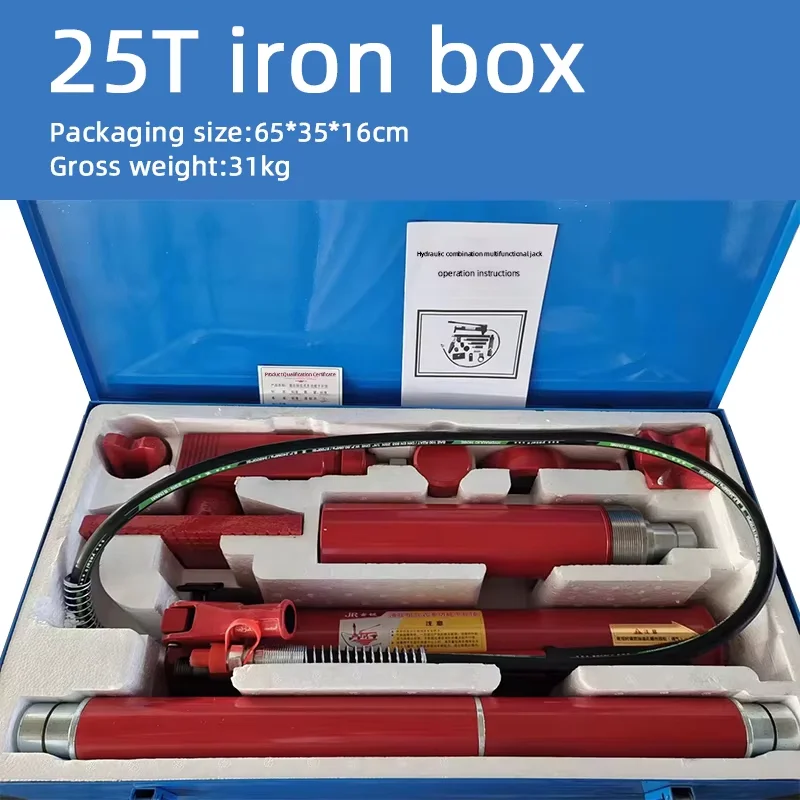
Separated Hydraulic Jack vs Toe Jack: How Do They Work?
Both products use hydraulic pressure to generate substantial lifting force, but their designs serve different purposes.
Separated Hydraulic Jack for Flexible Heavy-Duty Lifting
A separated hydraulic jack normally consists of:
- Hydraulic cylinder
- Hydraulic pump
- High-pressure hose
- Quick couplers
- Release valve
- Overload protection system
The cylinder and pump are separated, allowing technicians to position the cylinder close to the load while operating the pump from a more convenient location.
This configuration is particularly useful when working around heavy trucks, machinery, chassis components, and confined maintenance areas.
Toe Jack for Low-Clearance Lifting
A hydraulic toe jack has a specially designed lifting toe near the bottom of the housing. This allows the toe to slide under loads that cannot accommodate a conventional lifting saddle.
Its major advantage is low-clearance lifting. Toe jacks are widely used in industrial and mechanical environments and can also be useful for specialized automotive repair work.
Separated Hydraulic Jack vs Toe Jack: Key Differences
Lifting Height and Clearance
The biggest difference is the position from which each jack lifts.
A toe jack is designed for situations where the available clearance is extremely limited. The lifting toe can reach underneath machinery frames, vehicle components, and other low points.
A separated hydraulic jack is more flexible when there is sufficient space for the hydraulic cylinder and a suitable manufacturer’s lifting point.
Which Jack Is Better for Low-Clearance Vehicles?
If your primary requirement is lifting from an extremely low point, the toe jack has the advantage.
If you need greater flexibility in cylinder positioning and remote hydraulic operation, the separated hydraulic jack is usually the better choice.
Separated Hydraulic Jack Specifications for Automotive Repair
Professional separated hydraulic jacks are available in different capacities and configurations.
Common Separated Hydraulic Jack Specifications
Typical specifications can include:
- Capacity: 10T, 20T, 30T, 50T, 100T or higher
- Stroke: approximately 50–300 mm
- Working pressure: commonly around 63–70 MPa
- Cylinder type: single-acting or double-acting
- Pump: manual, electric or air hydraulic
- Hose length: customizable according to application
- Construction: high-strength steel
- Protection: overload relief valve
The exact specification should always be selected according to the manufacturer’s rated load, lifting point, stroke, and operating instructions.
Separated Hydraulic Jack Pump Options
Different hydraulic pumps provide different operating experiences.
Manual hydraulic pump:
Suitable for occasional repairs, mobile service, and situations where electrical power is unavailable.
Electric hydraulic pump:
Better suited to busy workshops where repeated lifting operations make speed and reduced operator effort important.
Air hydraulic pump:
Useful in professional workshops that already have a compressed-air system.
Toe Jack Specifications for Automotive Repair
Toe jacks are also available in different capacities and lifting configurations.
Common Toe Jack Features
Depending on the model, a hydraulic toe jack may provide:
- High lifting capacity
- Low minimum toe height
- Separate top lifting point
- Compact body
- Hydraulic overload protection
- Controlled lowering
- Manual or hydraulic operation
The most important specification for a toe jack is often minimum toe height, especially when servicing vehicles or equipment with limited ground clearance.
Separated Hydraulic Jack vs Toe Jack for Truck Repair
Heavy commercial vehicles create different lifting requirements from passenger cars.
Separated Hydraulic Jack for Trucks
A separated hydraulic jack can be useful for:
- Axle maintenance
- Suspension repairs
- Brake servicing
- Transmission work
- Chassis maintenance
- Wheel and hub repairs
Its remote pump arrangement allows technicians to position the lifting cylinder precisely while controlling the hydraulic system from a separate location.
Toe Jack for Trucks
A toe jack can be particularly useful when the truck has:
- Low chassis components
- Limited access underneath the frame
- Heavy machinery attachments
- Low-position lifting points
The toe can reach areas where a conventional top saddle may not fit.
Separated Hydraulic Jack vs Toe Jack for Automotive Repair
The application should determine which tool you purchase.
Separated Hydraulic Jack Applications
A separated hydraulic jack is suitable for:
- Heavy truck repair
- Commercial vehicle maintenance
- Fleet service centers
- Heavy machinery repair
- Industrial equipment installation
- Chassis maintenance
- Component positioning
It is especially valuable when technicians need high lifting capacity and flexible cylinder positioning.
Toe Jack Applications
A toe jack is more appropriate for:
- Low-clearance machinery
- Heavy equipment positioning
- Machine installation
- Industrial maintenance
- Specialized vehicle lifting
- Equipment with low lifting points
For automotive repair, it can be useful when conventional lifting points are difficult to access.
How to Use a Separated Hydraulic Jack Safely
Correct operation is essential regardless of the jack type.
Step 1: Inspect the Separated Hydraulic Jack
Before lifting, check:
- Hydraulic hose
- Cylinder
- Pump
- Quick couplers
- Hydraulic oil
- Release valve
- Lifting surface
Do not operate equipment with damaged hoses, leaking connections, or other visible defects.
Step 2: Position the Separated Hydraulic Jack
Place the cylinder directly beneath the vehicle manufacturer’s approved lifting point.
The cylinder should remain properly aligned with the load. Avoid side loading or unstable positioning.
Step 3: Lift the Vehicle Slowly
Operate the hydraulic pump gradually.
Monitor:
- Vehicle movement
- Cylinder alignment
- Hydraulic pressure
- Load stability
Stop immediately if the load shifts unexpectedly.
Step 4: Secure the Vehicle
After reaching the required height, use appropriately rated support stands or other approved supporting equipment before performing work underneath the vehicle.
A hydraulic jack is intended to lift a load; it should not be treated as the sole long-term support for a vehicle. Current automotive guidance also emphasizes selecting a properly rated jack and using appropriate jack stands for repair work.
How to Use a Toe Jack Safely
Toe jacks require additional attention to the lifting toe.
Step 1: Check the Minimum Clearance
Measure the clearance underneath the vehicle or equipment before positioning the toe.
The toe must fit completely beneath the approved lifting point.
Step 2: Position the Toe Correctly
Place the toe against a structurally suitable lifting point.
Do not use thin panels, bodywork, or components that are not designed to support the load.
Step 3: Lift Gradually
Operate the hydraulic mechanism slowly and observe the load throughout the lifting process.
Because toe jacks can lift from very low positions, maintaining correct alignment is particularly important.
Step 4: Add Proper Load Support
Once the vehicle reaches the required height, transfer the load to appropriately rated support equipment before starting repairs.
Separated Hydraulic Jack vs Toe Jack: Which Is Better for Your Workshop?
The answer becomes easier when you compare the main requirements.
| Requirement | Separated Hydraulic Jack | Toe Jack |
|---|---|---|
| Heavy-duty lifting | Excellent | Excellent |
| Remote hydraulic operation | Excellent | Depends on model |
| Very low clearance | Good | Excellent |
| Flexible cylinder positioning | Excellent | Moderate |
| Truck maintenance | Excellent | Good |
| Heavy machinery | Excellent | Excellent |
| Confined lifting points | Excellent | Excellent |
| Industrial maintenance | Excellent | Excellent |
| Specialized low-point lifting | Good | Excellent |
Choose a Separated Hydraulic Jack If You Need:
- High lifting capacity
- Flexible cylinder positioning
- Remote hydraulic operation
- Truck and commercial vehicle maintenance
- Heavy equipment servicing
- Frequent professional lifting
Choose a Toe Jack If You Need:
- Very low minimum lifting height
- Access underneath low-clearance equipment
- A compact lifting solution
- Machine positioning
- Specialized low-point lifting
Separated Hydraulic Jack vs Toe Jack: 2026 Workshop Trends
Modern repair shops are placing greater emphasis on safety, efficiency, and equipment flexibility. Recent automotive lifting guidance continues to stress that jack selection should consider vehicle weight, lifting location, clearance, and intended use rather than treating all jacks as interchangeable.
At the same time, professional workshops are increasingly interested in hydraulic systems that reduce physical effort and improve workflow. Electric and pneumatic hydraulic pumps, low-profile lifting solutions, and more portable hydraulic equipment are becoming attractive options for high-frequency maintenance environments.
For electric and commercial vehicles, lifting equipment also needs to accommodate heavier components and specialized underbody access. This makes capacity, minimum height, stroke, and lifting-point compatibility increasingly important when choosing professional equipment.
Final Verdict: Separated Hydraulic Jack vs Toe Jack
So, which is better: a separated hydraulic jack or a toe jack?
There is no universal winner.
A separated hydraulic jack is the better choice for workshops that need high-capacity, flexible, remote hydraulic lifting for trucks, commercial vehicles, and heavy equipment.
A toe jack is the better choice when low clearance is the main challenge and the lifting point is located close to the floor.
For a professional automotive repair shop, the most practical strategy may be to use both types for different jobs. The separated hydraulic jack provides versatile heavy-duty lifting, while the toe jack solves specialized low-clearance lifting problems.
Most importantly, always select equipment based on its rated capacity and approved lifting points, and never work beneath a vehicle that is supported only by a hydraulic jack.