
If you are choosing a hydraulic lifting tool, the correct answer is simple:
Most passenger cars need a 2–5 ton hydraulic jack, SUVs and light trucks need 5–10 tons, and heavy-duty industrial vehicles require 10–50+ tons depending on load conditions.
Using a jack with too low capacity is unsafe and may cause equipment failure. Over-sizing increases cost and reduces efficiency. The key is to match load weight with a proper safety margin of 25–50%.
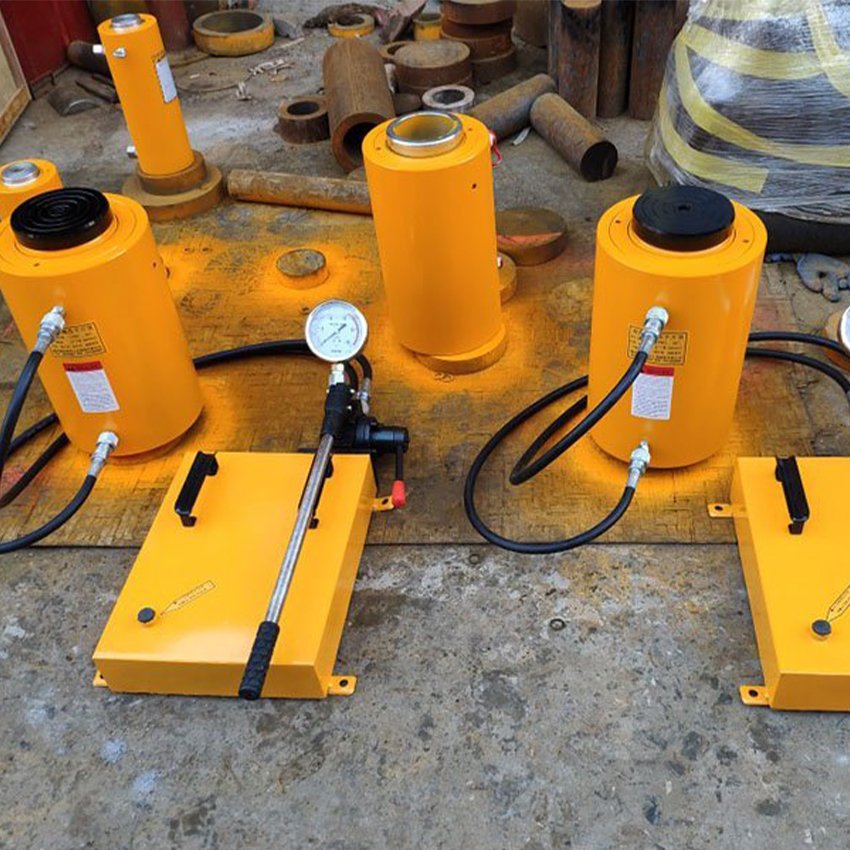
Hydraulic Jack Capacity Explained for Selection
The capacity of a hydraulic jack refers to the maximum safe lifting load under rated pressure.
Hydraulic Jack Capacity Ranges
- 2–3 Ton Hydraulic Jack
- Passenger cars, small sedans
- Basic garage maintenance
- 5 Ton Hydraulic Jack
- SUVs, pickups, light trucks
- Most commonly used in auto repair shops
- 10–20 Ton Hydraulic Jack
- Trucks, buses, industrial maintenance
- Heavy workshop operations
- 30–100+ Ton Hydraulic Jack
- Construction machinery, mining equipment
- Heavy-duty industrial lifting
In real workshops, technicians usually select a higher capacity than the actual load for safety redundancy.
Hydraulic Jack Specifications You Should Check
Choosing the right hydraulic jack is not only about tonnage. Professional systems are defined by multiple engineering parameters.
Key Hydraulic Jack Specifications
- Rated capacity: 2T / 5T / 10T / 50T / 100T
- Stroke range: 50mm – 300mm
- Closed height: 80mm – 300mm
- Working pressure: 63MPa – 70MPa
- Cylinder type: single-acting / double-acting
- Pump system: manual pump / electric pump / split hydraulic system
- Material: high-strength alloy steel or Q345 steel
- Safety system: overload protection valve
Separated hydraulic jack systems (jack + remote pump) are widely used in modern industry because they improve safety and allow remote operation.
Hydraulic Jack Capacity in Automotive Repair Applications
Passenger Vehicle Repair
- Recommended capacity: 2–5 tons
- Applications:
- Tire replacement
- Brake system maintenance
- Suspension inspection
SUV and Pickup Repair
- Recommended capacity: 5–10 tons
- Applications:
- Chassis lifting
- Axle replacement
- Exhaust system repair
Truck and Heavy Vehicle Repair
- Recommended capacity: 10–30 tons
- Applications:
- Transmission removal
- Frame alignment
- Heavy component installation
Separated hydraulic jack systems are especially useful in workshops because operators can control lifting pressure remotely, improving safety.
How to Choose the Right Hydraulic Jack Capacity
A practical engineering rule used in workshops:
Required capacity = Vehicle weight × 1.3 to 1.5 safety factor
Example:
- Vehicle weight: 3 tons
- Recommended jack: 4–5 ton hydraulic jack
This ensures safe lifting even when load distribution is uneven.
How to Use a Hydraulic Jack in Workshop Operations
Basic Operation Steps
- Place jack on a flat and stable surface
- Align lifting point with vehicle chassis
- Connect hydraulic pump (if separated system)
- Pump slowly until lifting begins
- Always use safety stands before working
- Release pressure slowly after completion
Safety Practices
- Never exceed rated capacity
- Always use support stands
- Avoid sloped or unstable ground
- Check hydraulic oil level regularly
- Inspect seals and hoses before use
Hydraulic Jack Industry Trends (2026 Update)
The hydraulic lifting industry is evolving quickly due to automation and safety upgrades.
Key Trends
- Smart pressure-controlled hydraulic systems
- Portable separated hydraulic jack systems
- Electric-hydraulic hybrid pumps
- Increased demand in EV maintenance workshops
- Lightweight high-strength alloy structures
In 2026, electric vehicle repair workshops are driving demand for more stable and precision-controlled hydraulic lifting systems due to heavier battery structures and stricter safety requirements.
Why Choosing the Right Hydraulic Jack Capacity Matters
Incorrect selection is one of the most common causes of workshop accidents.
A properly matched hydraulic jack provides:
- Higher operational safety
- Longer service life
- Faster maintenance efficiency
- Lower long-term cost
For most auto repair workshops, a 5–10 ton separated hydraulic jack system is the most balanced solution between versatility and safety.